
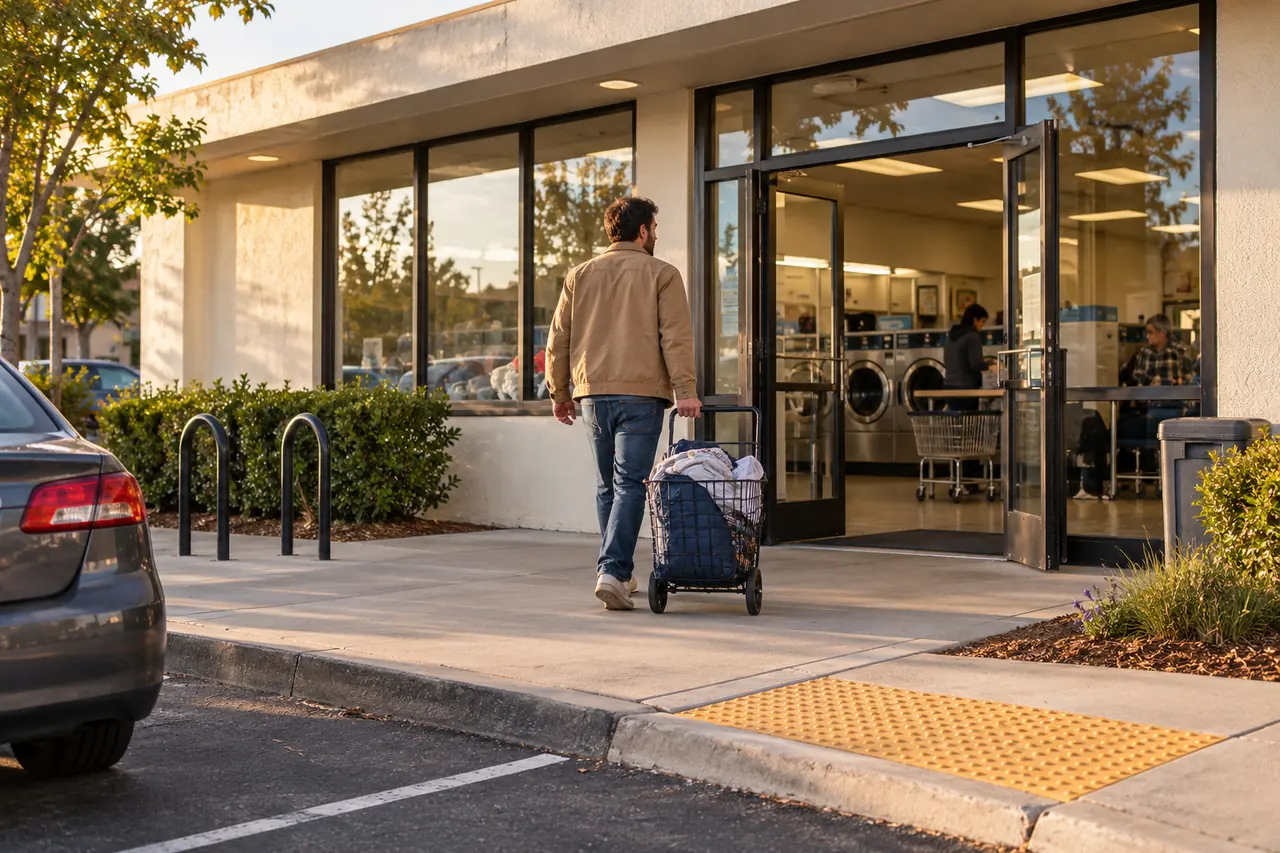
1. Begin before you reach the door
Approach from the parking area, nearby homes and transit stops that a customer might use. Note crossings, changes in level, obstacles and the effort of moving a cart. Check the return journey as well as the arrival.
Record what you can see: where parking is posted as permitted, the route to the entrance, lighting conditions at the time and whether a loading task would block others. Confirm parking rights and any time restrictions rather than assuming the empty spaces belong to the premises.
2. Look for barriers, then get them assessed
Pay attention to steps, door operation, thresholds, circulation space and items left in the route. These details affect people using mobility aids as well as customers handling laundry carts.
Visible observations are not an accessibility compliance assessment. Ask a qualified professional to review the applicable requirements and any proposed changes. Note who controls the entrance and who would approve or pay for work; do not treat a possible fix as an agreed one.
3. Observe what customers can choose today
Visit operating alternatives at more than one time. Record posted opening hours, machine sizes, payment options, visible out-of-service signs, waiting space and whether people appear to wait for a machine. Mark the date and time beside every observation.
Do not convert visible activity into a sales estimate. You do not know the full operating period, customer mix or costs from a short visit. Shared apartment facilities and pickup services also belong in your questions about alternatives, even when they are less visible from the street.
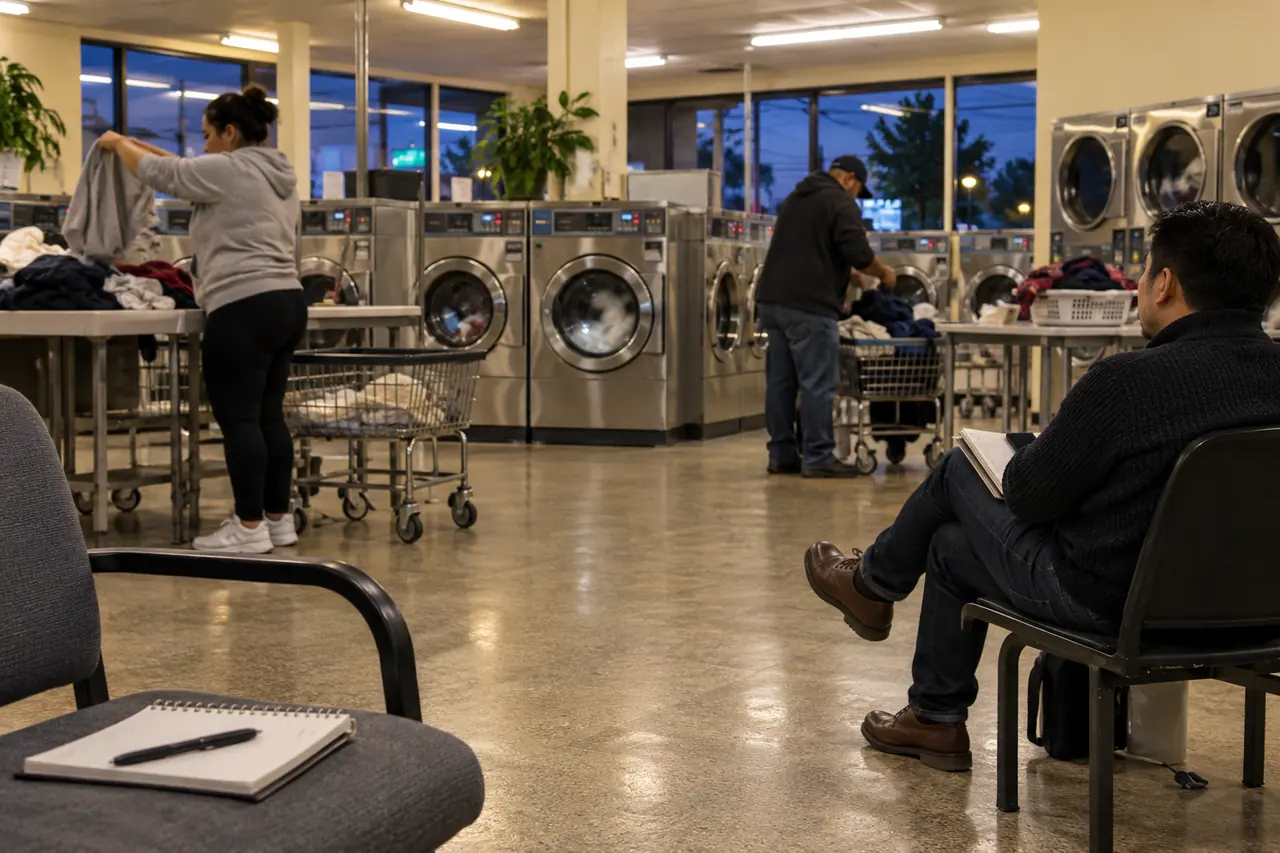
4. Make each visit easy to compare
Use short, factual notes before writing an opinion. “Two machines displayed out-of-service notices during this visit” is a record you can revisit. “The competition is weak” skips the evidence and the uncertainty.
Choose a weekday and a weekend visit, or another pair of times relevant to the operation you are considering. This is a planning suggestion, not a rule that proves demand. If conditions differ, record the difference instead of averaging it away.
- Arrival: route taken, parking conditions and entrance observations.
- Service: posted information, machine availability and waiting conditions.
- Questions: what requires a second visit, a conversation or written confirmation.
5. Return the findings to your shortlist
After each visit, add one finding and one next action for the address. A promising arrival route might justify a closer building inspection. An unresolved entrance barrier might require a feasibility review before further negotiation.
Read the neighborhood report alongside this record. The numbers can suggest where to ask questions; your visits supply a different kind of evidence. Keeping both visible is more useful than asking either one to make the decision alone.
Your field-visit record
- Use the same observation sheet at each address.
- Walk the arrival and return routes with a laundry trip in mind.
- Get entrance and accessibility questions reviewed professionally.
- Date competitor observations and repeat them at different times.
- Record the next action before leaving each site.