
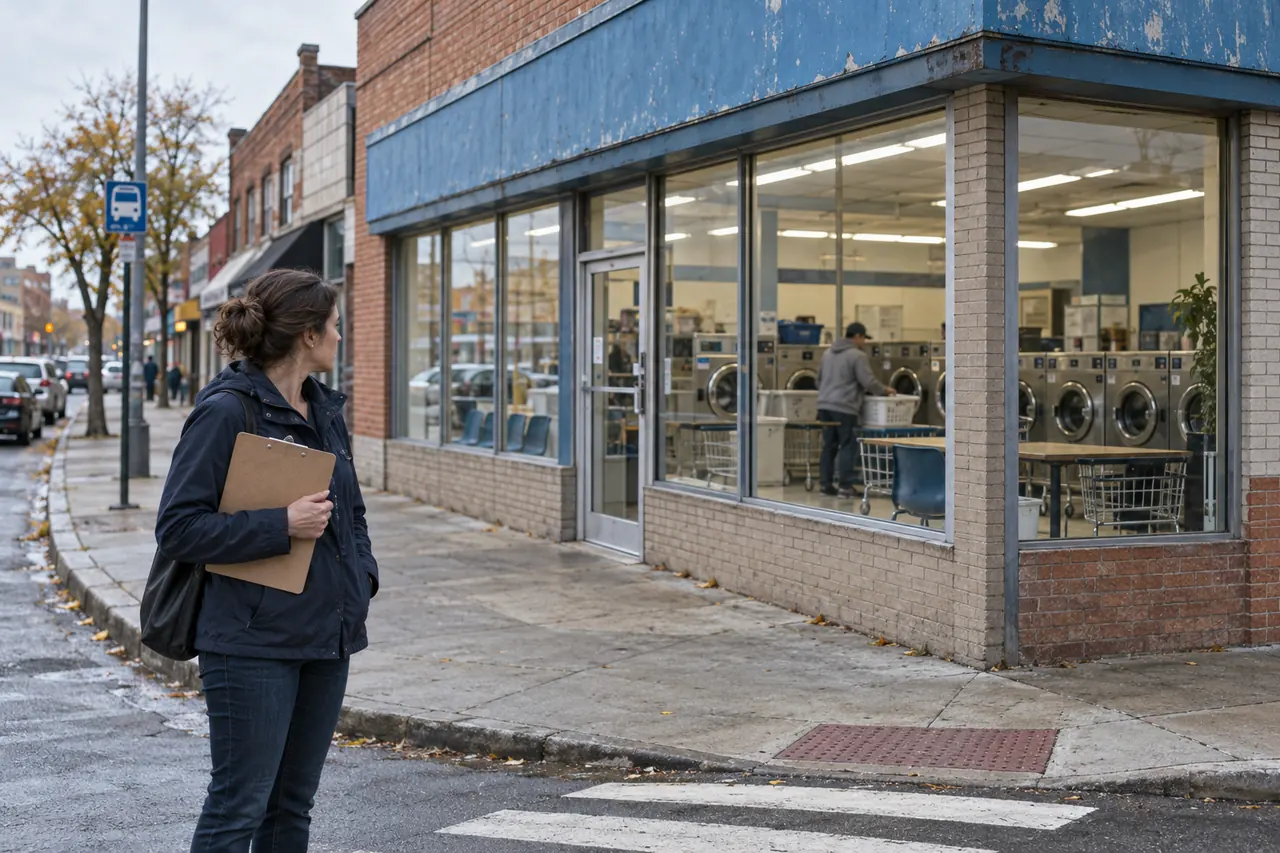
1. Ask how people actually do laundry
Combine demographic research with direct customer research. For a laundromat, turn that into specific conversations: where do nearby residents wash clothes today, how do they get there, and what makes the trip difficult? Ask about building laundry rooms, machine availability, bulky items, preferred hours and payment methods.
Record what people say separately from your assumptions. A renter may have an in-unit washer or a convenient shared laundry room. Renter share alone cannot establish washer access, unmet demand or willingness to switch.
- Walk likely customer routes with a laundry bag in mind: crossings, steps, parking and transit stops.
- Speak with residents and property managers rather than assuming every apartment building has the same facilities.
2. Observe the alternatives customers already use
Build a dated competitor log. Visit nearby laundromats at several times, including a weekday evening and a weekend period. Note posted prices, machine sizes, payment options, opening hours, cleanliness, visible maintenance issues and whether people wait for machines.
Treat each visit as a snapshot. A busy hour does not establish annual sales, and an empty store does not prove there is no demand. Include shared building laundry and pickup or delivery services in your questions about alternatives. Map listings and reviews can suggest places to investigate; confirm that they are operating.
3. Compare the full lease and opening costs
Create one worksheet per site using the actual lease proposal and written quotes. The advertised rent is only one entry. Ask the landlord to identify additional charges, increases, deposits, repair responsibilities, insurance requirements and when rent starts during construction.
Ask a qualified lease adviser to review permitted use, renewal and assignment terms, guarantees, alteration rights and what happens if approvals or utility work cannot be obtained. Put answers in writing. Separately list equipment, installation, professional fees, permits and opening supplies, then recurring rent, utilities, staffing, maintenance and insurance. Separate one-time and monthly expenses without substituting generic industry averages for site-specific quotes.
4. Match the equipment plan to the building
Prepare a proposed machine list before asking contractors whether the space works. Request model-specific installation requirements, service arrangements, warranty terms and delivery estimates. Explore certified commercial washer models, but certification does not establish whether a particular machine suits your layout or customer needs.
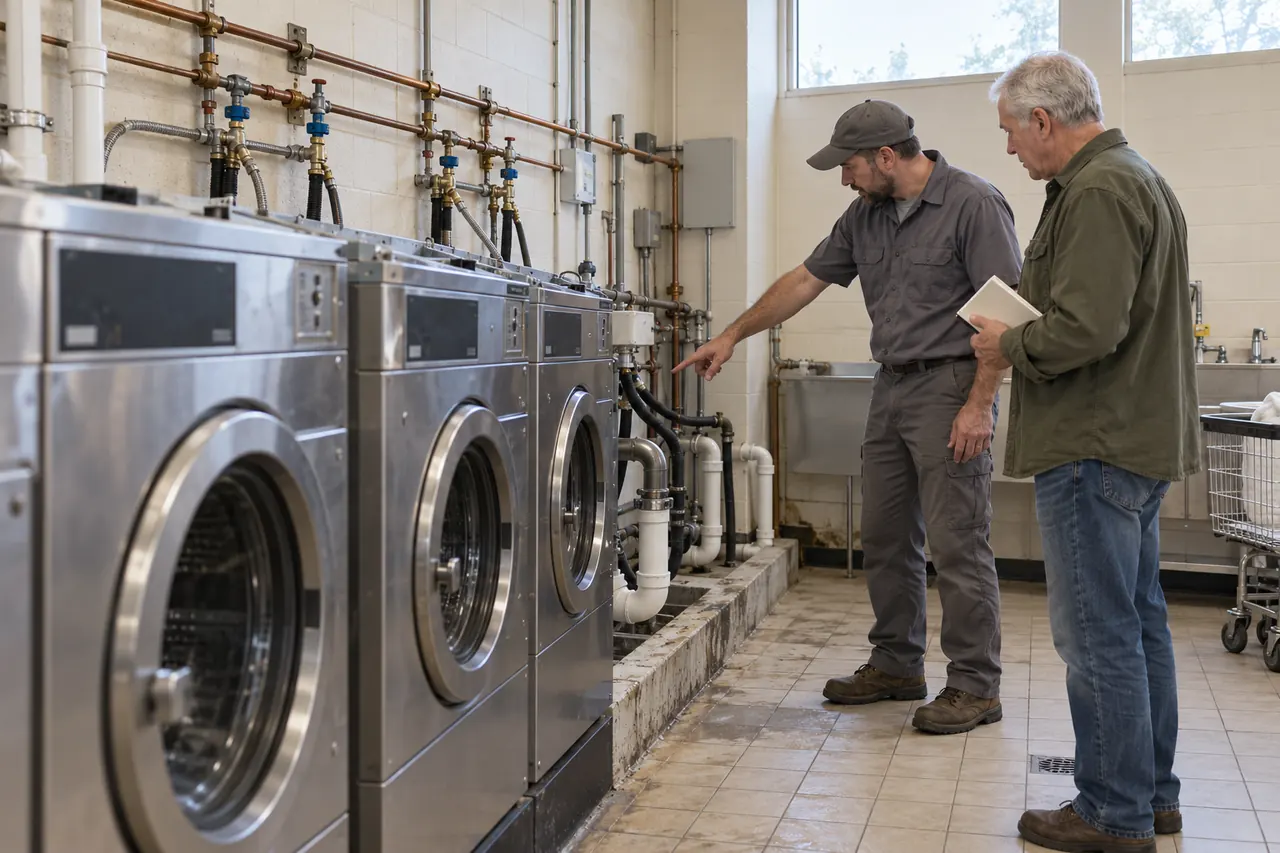
Have qualified contractors and the relevant utilities check the proposed installation. Ask for a written scope, price and schedule for any upgrades. An existing laundry space still needs verification against your equipment plan.
- Water and sewer: can the supply, hot-water system, drainage and connection serve the proposed machines? What rates and connection charges apply?
- Electricity and gas: what service is available, what loads will the equipment require, and who pays for changes?
- Ventilation: can the dryer exhaust and required replacement air be provided, with landlord approval for the necessary routes and openings?
5. Verify approvals for this address
Licensing and permitting depend on location and activity. Ask the local planning and building offices whether your proposed laundromat use is allowed and which reviews apply. Ask about occupancy, accessibility, plumbing, electrical, gas, mechanical, fire and signage requirements as relevant to your plans, plus any utility or wastewater approvals.
Keep the office name, contact, date and written response. Confirm the application sequence, fees and inspection stages before setting an opening date. A landlord's assurance that a laundromat is possible is a starting point for verification.
6. Use demographics to decide what to investigate next
LaundryLocation compares up to three U.S. addresses using 2020–2024 demographic estimates for the larger statistical area containing each address. These describe an area across five years; they are not a current headcount, a walking radius or a measured customer catchment. Two addresses in the same statistical area can share demographic figures while having different access, competition and building constraints.
Review the estimates alongside their 90% uncertainty ranges. Small numerical differences may not establish a meaningful difference between locations. Use the report to identify questions for further work, without turning renter share or income into a revenue forecast.
The comparison is $49 once, with PDF and CSV exports. You can explore the sample comparison and methodology while assembling your shortlist. The useful outcome is a clearer comparison and a record of what remains unverified. Neither the price nor the report guarantees that you will avoid a costly mistake or build a successful business.
Your shortlist checklist
- Document customer laundry habits and actual washer access.
- Log operating competitors, prices and dated observations.
- Obtain the complete lease proposal and professional review.
- Collect equipment, installation and ongoing service quotes.
- Verify water, sewer, electrical, gas and ventilation feasibility.
- Confirm applicable approvals with the responsible local offices.
- Compare neighborhood estimates with their uncertainty and geographic limits.
- List unresolved questions before making a commitment.