
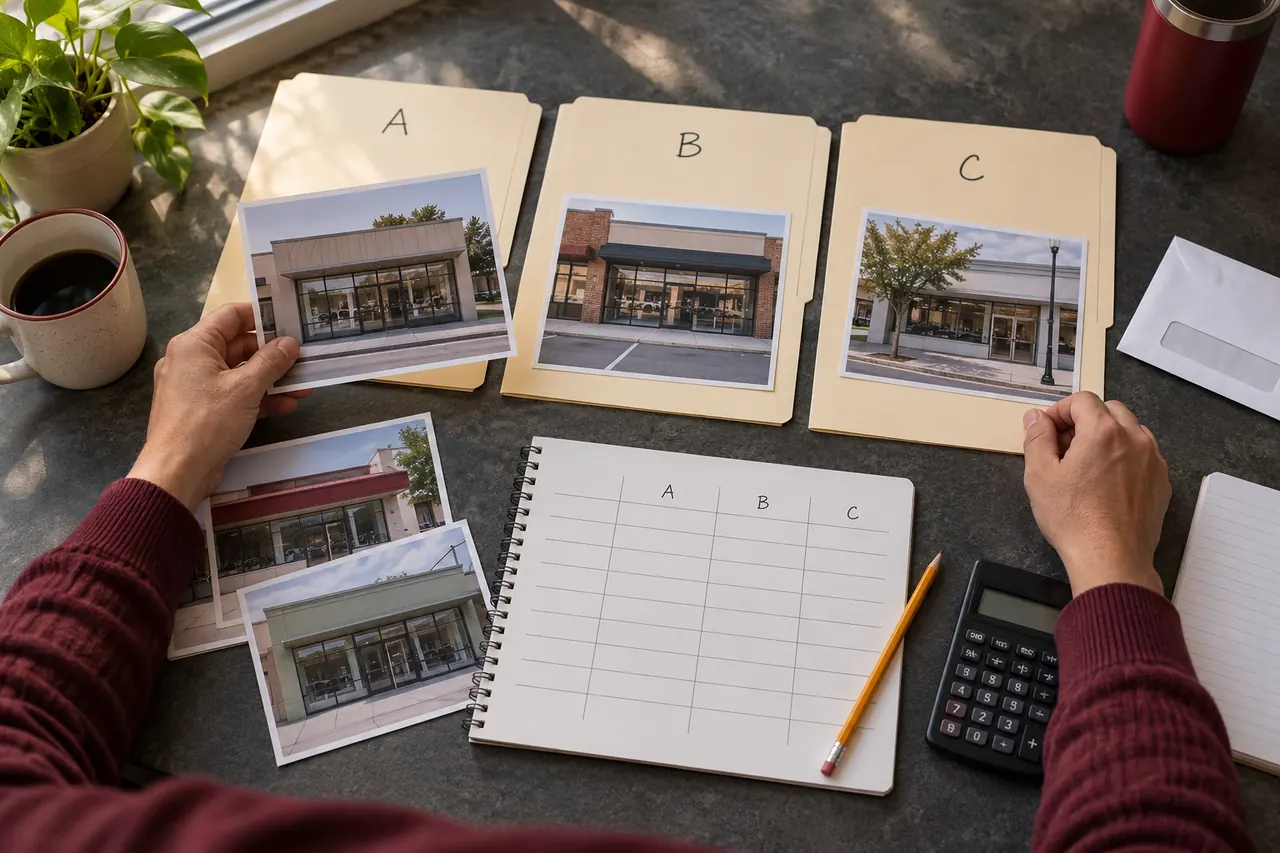
1. Give every address the same brief
Write down the operation you are evaluating: intended opening hours, proposed equipment mix, services and the space you expect to use. Send that same brief to the people reviewing each site. Otherwise one quote may assume a different business from the next.
Give the addresses neutral labels such as A, B and C. Keep the actual addresses and dated documents alongside them. Avoid choosing a favorite first and asking more forgiving questions about it.
2. Separate opening work from recurring commitments
Make two cost lists. The opening list might include equipment, installation, professional fees, deposits and permit applications. The recurring list might include rent, utilities, maintenance, insurance and staffing. Use written, site-specific figures as they become available.
Keep the period and scope beside each amount. A monthly charge cannot be compared directly with a one-time quote. Ask what is excluded, who is responsible, when payment starts and how long the quote remains valid. An unknown is an empty decision input, not a zero.
3. Compare the evidence, not just the totals
Use a small evidence sheet before adding a score. The rows below are prompts for your own documents, not assumed costs or a ranking formula. If the evidence is missing, name the person or office that can resolve it.
Record the source and date of each answer. A verbal assurance and an installation quote should remain visibly different kinds of evidence.
| Compare | Evidence to collect | Question to resolve |
|---|---|---|
| Lease commitment | Complete proposal and adviser review | Which charges and repair duties are included? |
| Opening work | Site-specific contractor scope | What must be installed or upgraded before opening? |
| Ongoing operation | Equipment service terms and utility rates | What changes with usage and what is fixed? |
| Customer convenience | Dated route and competitor visits | What would a laundry trip to this address involve? |
| Neighborhood context | Comparable area estimates and uncertainty | Which questions should fieldwork resolve? |
4. Keep hard constraints separate from preferences
Some findings need resolution before a site can stay on the shortlist: whether the proposed use is allowed, whether the installation is feasible and whether the lease permits the necessary work. Have the relevant professionals and local offices verify these points.
Preferences such as a brighter frontage or a particular street corner can be compared later. Do not let an attractive weighted score conceal an unresolved constraint. Write “cannot proceed until verified” where that is the actual position.
5. Use the report for the part it can answer
A neighborhood comparison can keep the demographic side of the worksheet consistent across addresses. It cannot fill in a contractor quote, confirm a landlord promise or establish how many customers will switch to you.
When two locations have similar area figures, that is useful information about where to spend your time next. Investigate the lease, utilities, access and alternatives. Your final comparison should show why you kept or removed each address, and which uncertainties you are still carrying.
Your comparison worksheet
- Use the same operating brief for each address.
- Separate one-time costs from recurring amounts.
- Leave unknowns visible and assign a next action.
- Resolve feasibility and approval questions before scoring preferences.
- Keep the documents behind the comparison.